
Novak Djokovic and Carlos Alcaraz clash in the Australian Open final with history on the line as Djokovic chases a record 25th Slam and Alcaraz eyes a career Grand Slam.

West Bengal Chief Minister Mamata Banerjee launched a scathing attack on the BJP-led central government, accusing it of attempting to suppress voting rights and polarise the electorate ahead of the assembly elections.

Union Home Minister Amit Shah launched the BJP's manifesto for West Bengal, promising a Uniform Civil Code, a Bengali chief minister, and improved governance.

Kerala Chief Minister Pinarayi Vijayan has accused the Congress party and Rahul Gandhi of acting as the 'B-team' of the BJP, alleging appeasement politics and seeking support from communal groups.

Mamla Legal Hai 2 draws humour from its assorted characters, crafting quirky storylines inspired by newspaper headlines, and anchored by consistently strong performances, led by an ever-reliable Ravi Kishan, applauds Sreeju Sudhakaran.

The Maharashtra government has initiated action against those involved in an alleged job fraud targeting fresh graduates with the promise of jobs at Hinjewadi IT Park in Pune. The government is also working on regulations to address forced resignations and layoffs in the IT sector.

'The reason why they rushed through the bill was they wanted to avoid using the 2026 Census because the 2026 Census by their own decision will be a caste census.' 'The BJP knows that a significant share of the OBCs who will get captured in the census, for the first time after the 1931 Census, are against the BJP. Only a segment of the OBCs are in their favour.' 'So they wanted to avoid the OBC reservation among women, which is a demand of a lot of Opposition parties.'

Royal Challengers Bengaluru has invested significantly in upgrading crowd management and security at the M Chinnaswamy Stadium following a tragic stampede last year. The enhancements include AI-led CCTV, reworked entry points, and revised agreements with the KSCA.

West Bengal Chief Minister Mamata Banerjee has refuted Prime Minister Narendra Modi's claims regarding the state's fish production, accusing him of misrepresenting facts and alleging restrictions on non-vegetarian food consumption in BJP-ruled states.
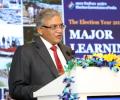
Opposition MPs have submitted notices in both Houses of Parliament seeking a motion for the removal of Chief Election Commissioner (CEC) Gyanesh Kumar, alleging partisan conduct and obstruction of electoral fraud investigations.

A 34-year-old man from Uttar Pradesh was arrested in Kerala for allegedly using duplicate keys to steal ATM cards from two-wheelers and withdraw money from bank accounts.

The Supreme Court will examine whether the reduction in NEET-PG qualifying marks affects the standard of postgraduate medical education, following petitions challenging the cut-off reduction for the current academic year.

A court in Kollam, Kerala, has sentenced a man to life imprisonment for the aggravated sexual assault and torture of a four-year-old girl, highlighting the severity of child abuse cases and the legal consequences.

Indian police have arrested three more individuals allegedly involved in a Pakistan-linked espionage racket, bringing the total number of arrests to 21. The suspects are accused of sending sensitive information to Pakistan.

The Madhya Pradesh high court has dismissed a petition filed by Shah Bano Begum's daughter seeking to stop the release of the Hindi film Haq, inspired by her mother's famous legal battle, holding that a person's right to reputation or privacy is not heritable.
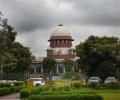
The Supreme Court has sought the Centre's response on a plea seeking the implementation of the 2023 Nari Shakti Vandan Act, which reserves one-third of seats for women in the Lok Sabha and state assemblies.

Second seed Novak Djokovic complained of a "hole" on Centre Court at Wimbledon after beating Adrian Mannarino in his delayed fourth-round match on Tuesday.

The Supreme Court of India has permitted the withdrawal of life-sustaining treatment for a 32-year-old man who has been in a coma for over 13 years following a traumatic brain injury.
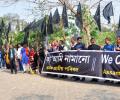
The Supreme Court has announced it will begin final hearings on May 5 regarding the constitutional validity of the Citizenship (Amendment) Act, 2019 (CAA), with over 200 petitions challenging the law.
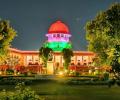
The Supreme Court has agreed to list for final hearing the pleas challenging the validity of certain provisions of the Places of Worship (Special Provisions) Act, 1991.

The Delhi High Court has questioned the blanket ban on protests and demonstrations on the Delhi University campus, seeking justification from the university and Delhi Police. The court acknowledged the need for balance but emphasized that a complete prohibition is likely untenable.

The Supreme Court has directed the central government to provide accurate transcripts of videos related to climate activist Sonam Wangchuk's detention, emphasizing the need for precision in translations, especially with the advent of Artificial Intelligence.
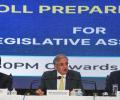
Over 130 Lok Sabha and 63 Rajya Sabha MPs have signed notices seeking the removal of Chief Election Commissioner Gyanesh Kumar, alleging partisan conduct and obstruction of electoral fraud investigations.

West Bengal Chief Minister Mamata Banerjee has accused the BJP-led central government of attempting to suppress voting rights through voter roll revisions, describing Prime Minister Narendra Modi as the 'biggest infiltrator'.
West Bengal Chief Minister Mamata Banerjee has accused the BJP-led central government of attempting to suppress voting rights through voter roll revisions, describing Prime Minister Narendra Modi as the 'biggest infiltrator'. She framed the upcoming assembly elections as a fight for democratic rights and Bengal's social harmony.

The Delhi High Court has asked the Centre to explore video conferencing options for an Indian citizen detained in the UAE, to facilitate legal assistance. The court is hearing a petition filed by the detainee's sister, actress Celina Jaitly, seeking legal representation for her brother.

'All this talk about women's reservation and Nari Shakti is a mirage.' 'It is a classic Trojan horse to bring about an alteration in the structure of political competition -- to the enduring advantage of the BJP.'
It was hearing the plea which alleged that the collegium recommendation of the high court was void as one of the senior judges, Justice Nisha Banu, was not part of the deliberations.

After a gap of more than three years, the central government has agreed to resume the Mahatma Gandhi National Rural Employment Guarantee Act (MGNREGA) works in West Bengal with immediate effect, but subject to mandatory adherence to stringent conditions. These include a prohibition on any work valued at more than 20 lakh, compulsory 100 per cent electronic know-your-customer (eKYC) verification of all workers, and mandatory pre-estimation field visits for all works before they are undertaken.
The Supreme Court is reviewing the detention of climate activist Sonam Wangchuk after his wife, Gitanjali J Angmo, alleged that key video evidence used to justify his detention was not properly presented to him.
A village panchayat clerk in Palakkad, Kerala, was arrested by the Vigilance and Anti-Corruption Bureau (VACB) for allegedly accepting a bribe of Rs 2,500 for issuing a residence certificate.

Roger Federer's straight sets demolition of Romanian Victor Hanescu on Thursday served a timely reminder to the men who would be king that on centre court he still rules supreme.

Small parties have the capacity to play both ends against the middle. Puducherry could be heading that way, points out Aditi Phadnis.

Former champion Dinesh Khanna sees similarities between his 1965 Badminton Asia Championships win and Ayush Shetty's current run in the tournament.

A Delhi court acquitted three men accused of a 2015 murder, citing material inconsistencies in the prosecution's case and unreliable witness testimonies.

Additional Sessions Judge Amit Bansal directed the stay after the Delhi Police challenged the bail order by Duty Magistrate Vanshika Mehta, and listed the matter on March 6 for further proceedings.

The Kerala High Court granted bail to a Sri Lankan refugee suspected of being an LTTE member in a UAPA case, citing prolonged judicial custody without trial commencement.
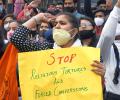
The Supreme Court has sought responses from the Centre and 12 states on a PIL challenging the validity of their anti-conversion laws. The National Council of Churches in India (NCCI) filed the PIL, seeking a stay on the operation of these laws.

Former RPF constable Chetansinh Chaudhary, accused of killing his senior and three passengers on a train in 2023, has applied for bail, citing 'borderline insanity' and blaming railway authorities for not assessing his mental state.

The Dhurandhar movies will undoubtedly shape the minds of the audience much more than news reports, court investigations, books and documentaries. But it is worth remembering that Pakistan's irridentist claims against India's national security have succeeded due to strategic planning, diplomacy, and the unsung heroines and heroes across government agencies, not due to a single maverick leader, points out Shweta Desai.But it is worth to remember that Pakistan's irredentist claims against India's national security have succeeded due to strategic planning, diplomacy, and the unsung heroines and heroes across government agencies -- not a single maverick, points out Shweta Desai.
